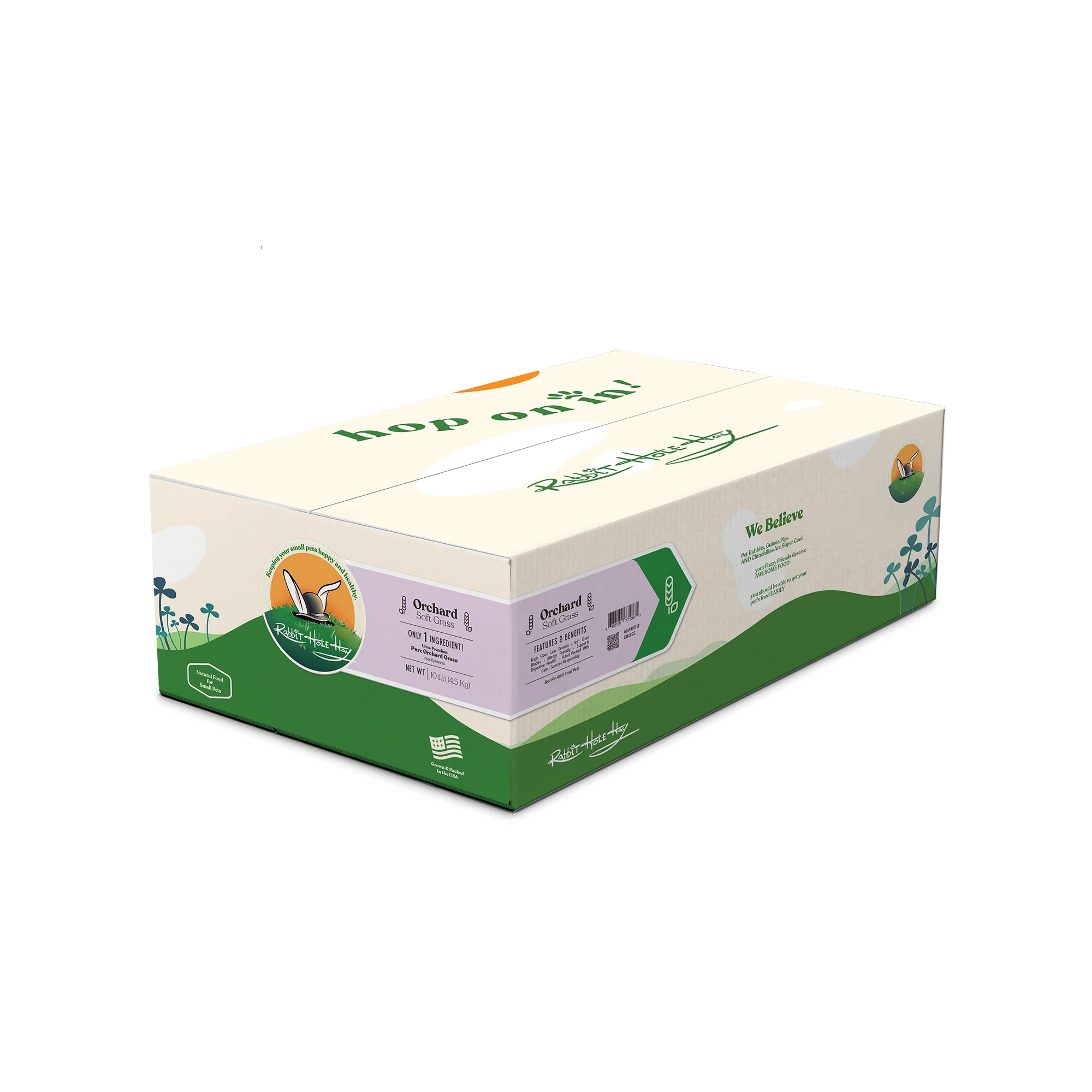
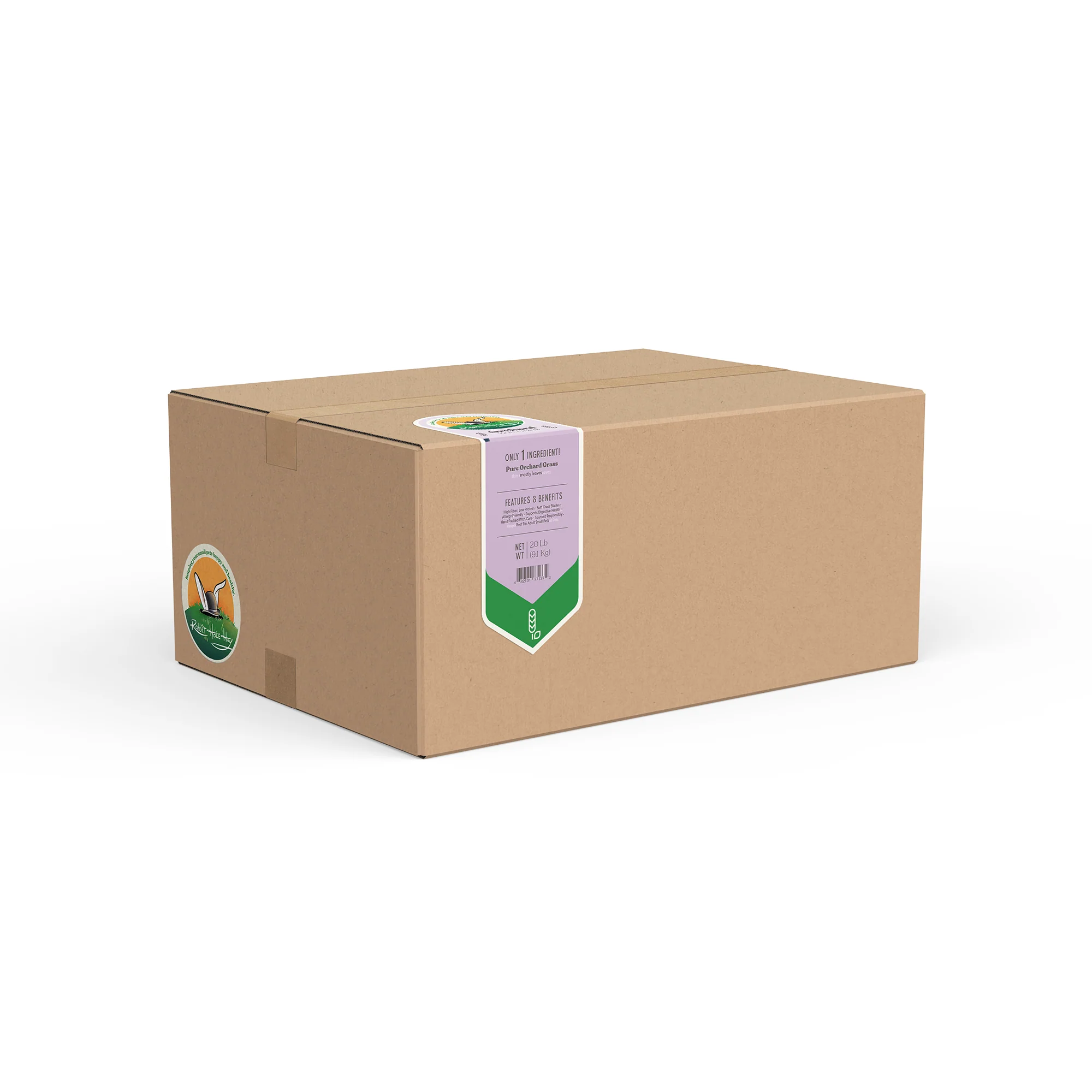
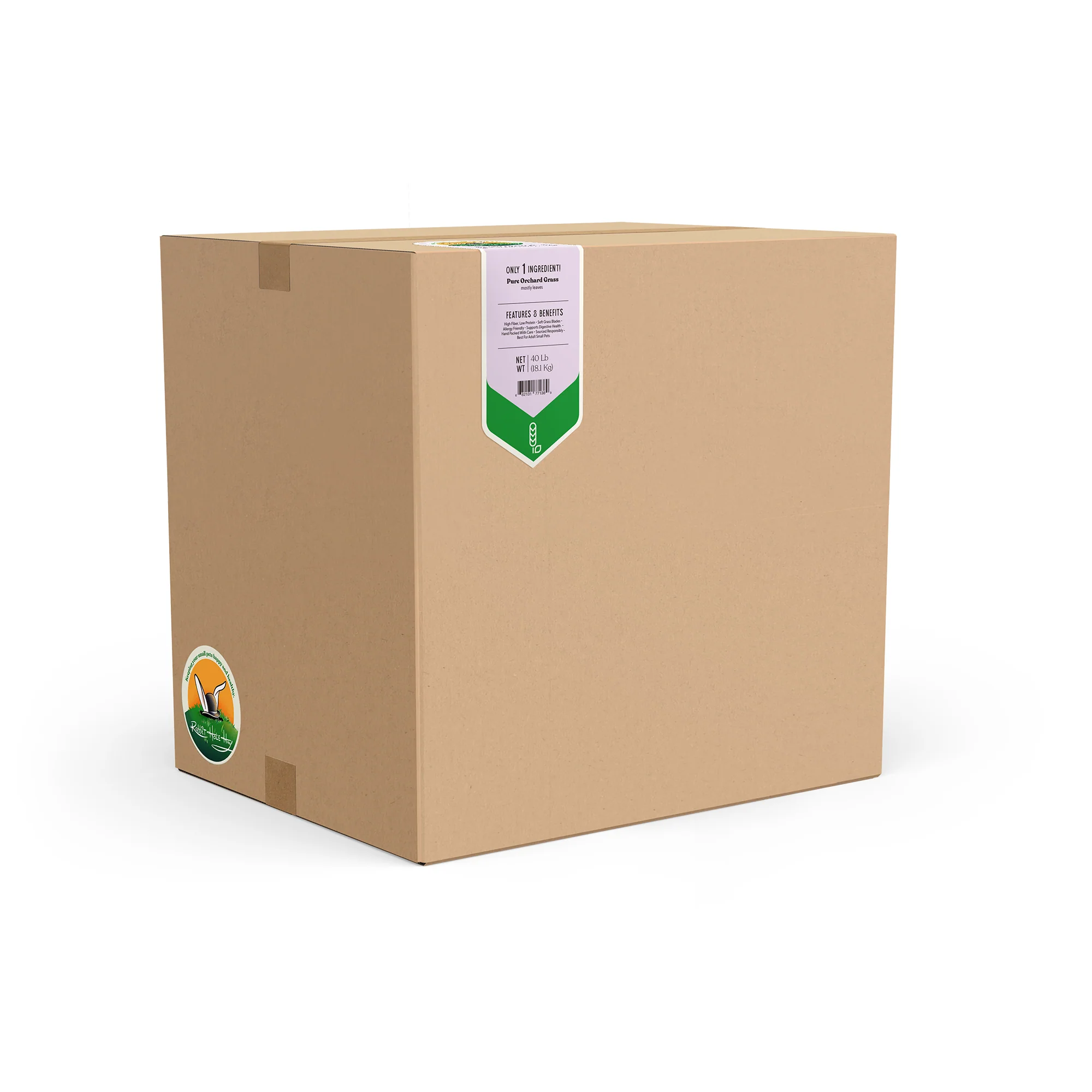
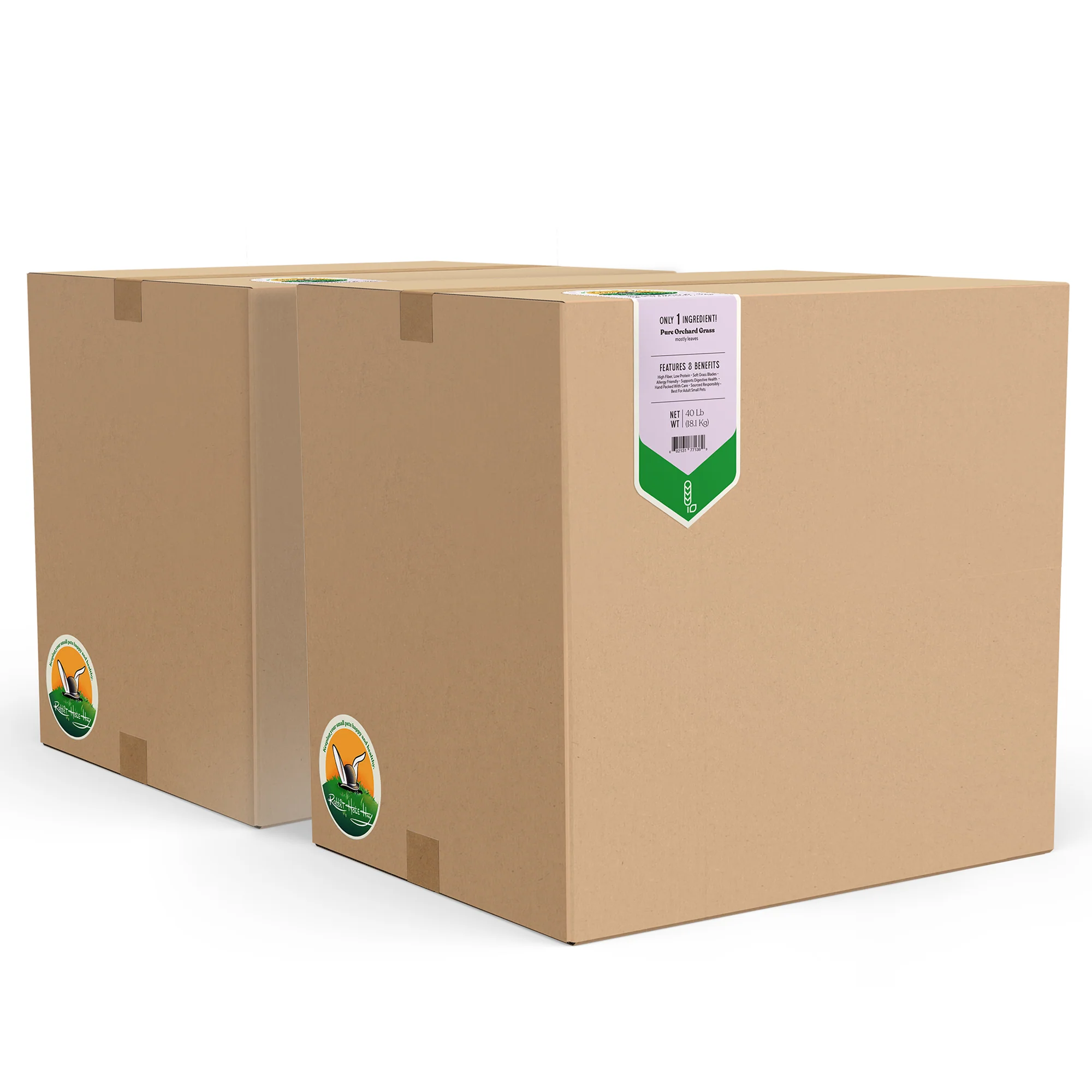
Ultra Premium Soft Orchard Grass
What is Ultra Premium Soft Orchard Grass?
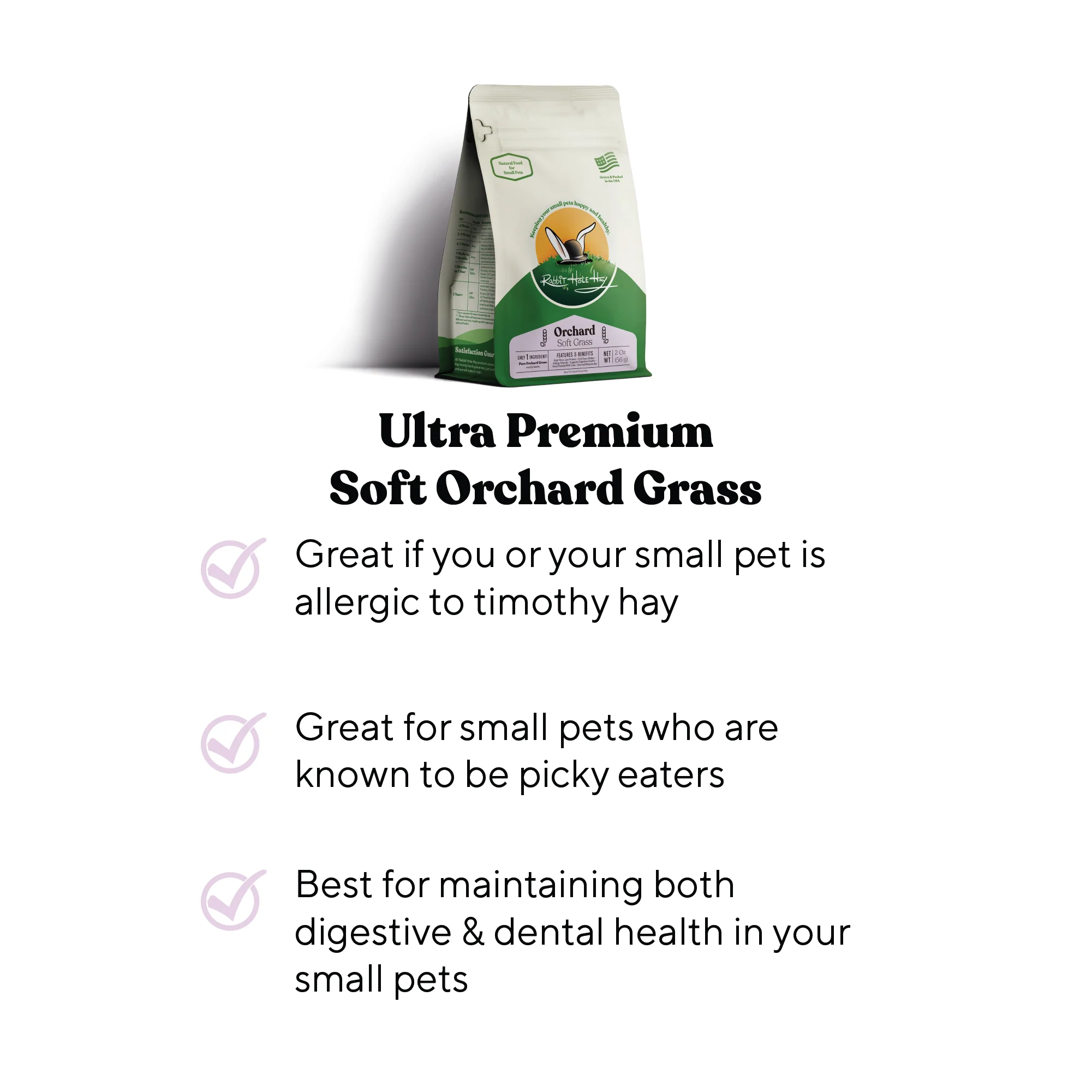
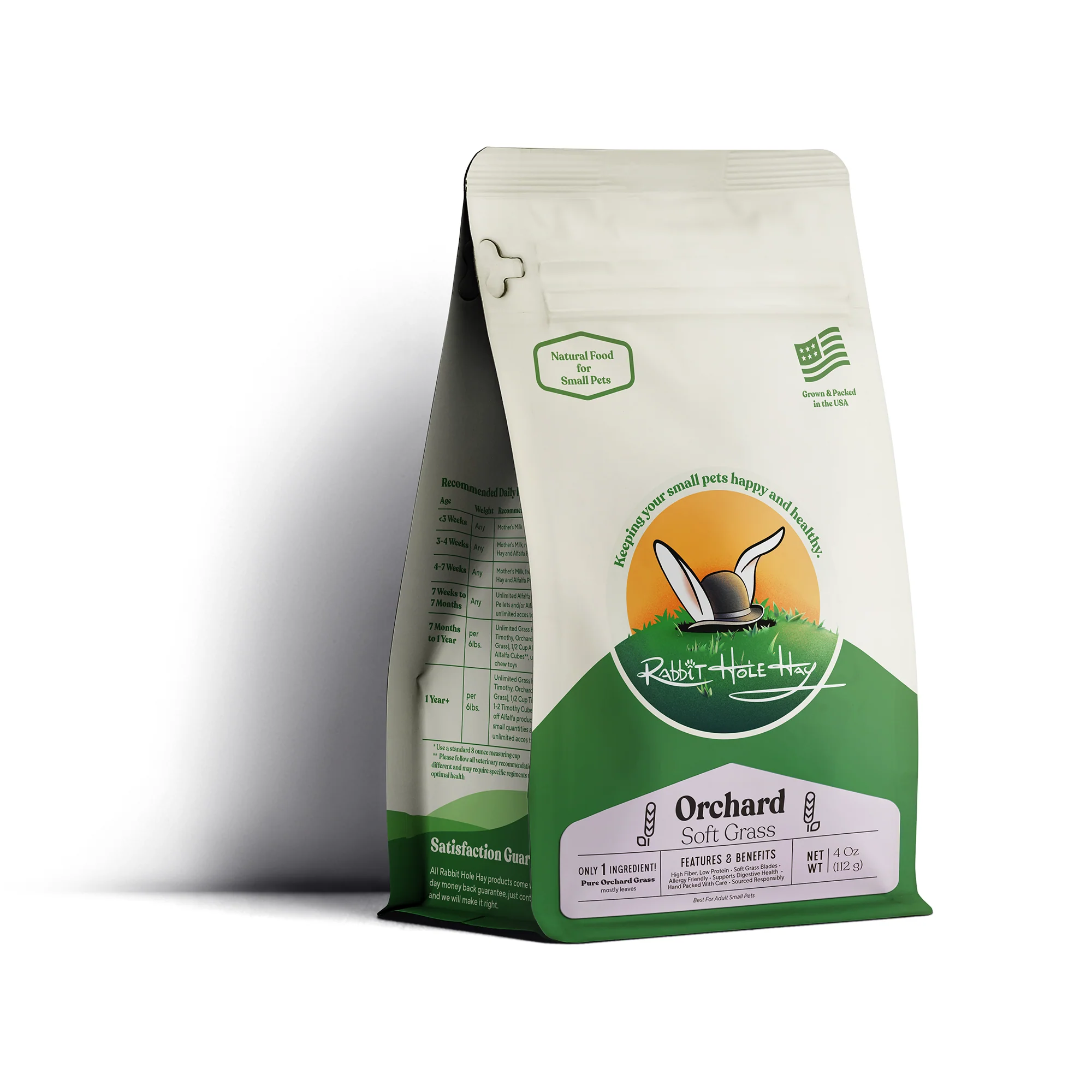
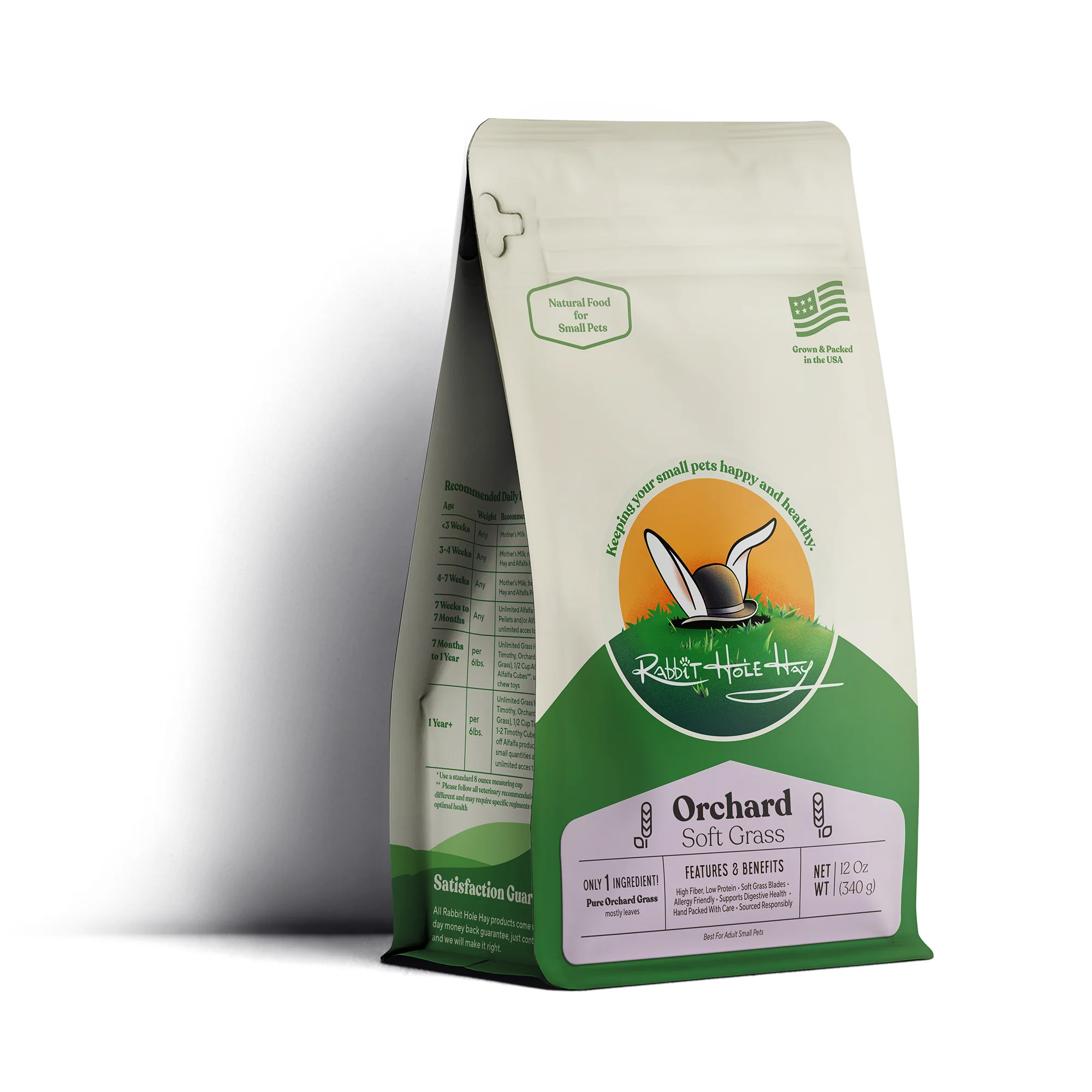
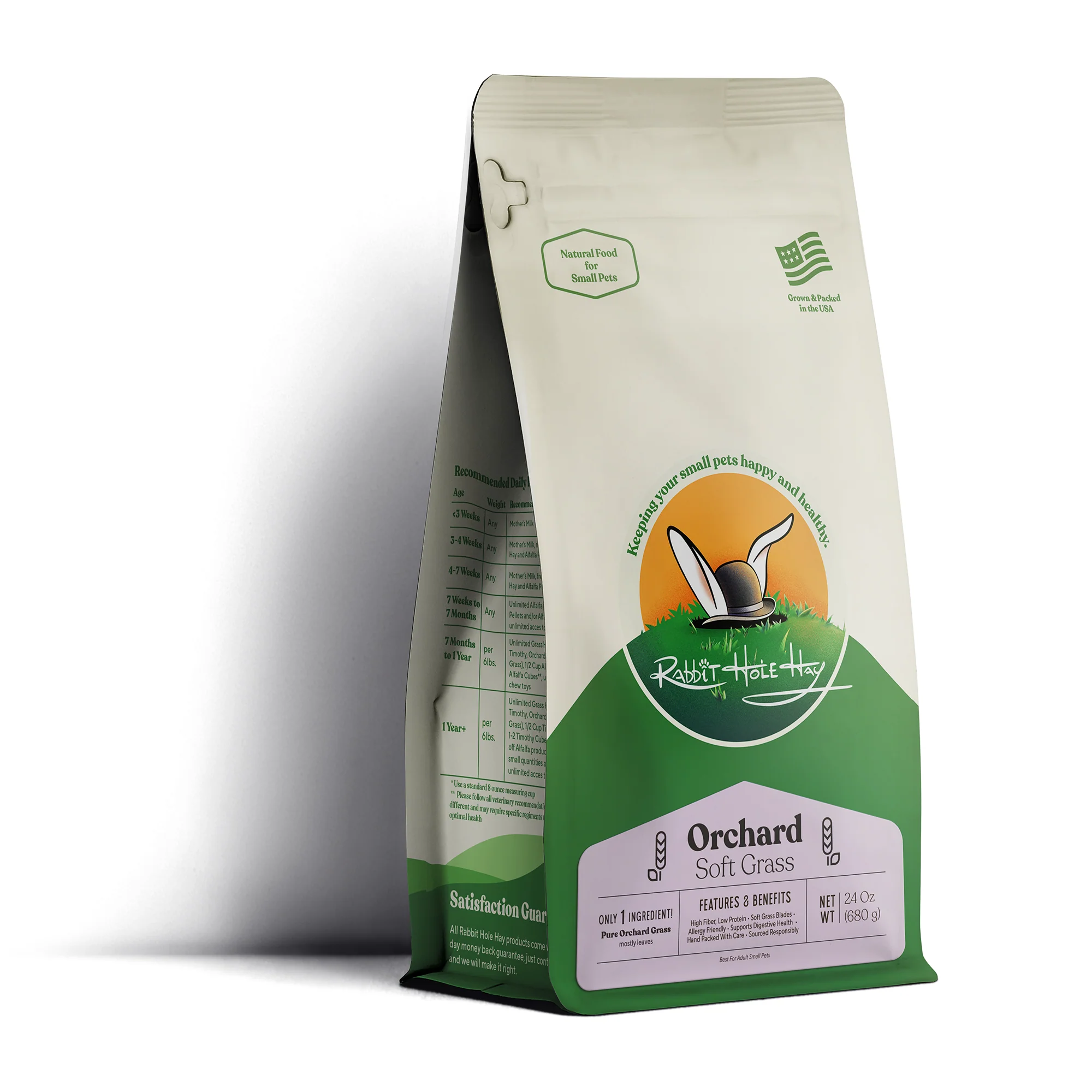
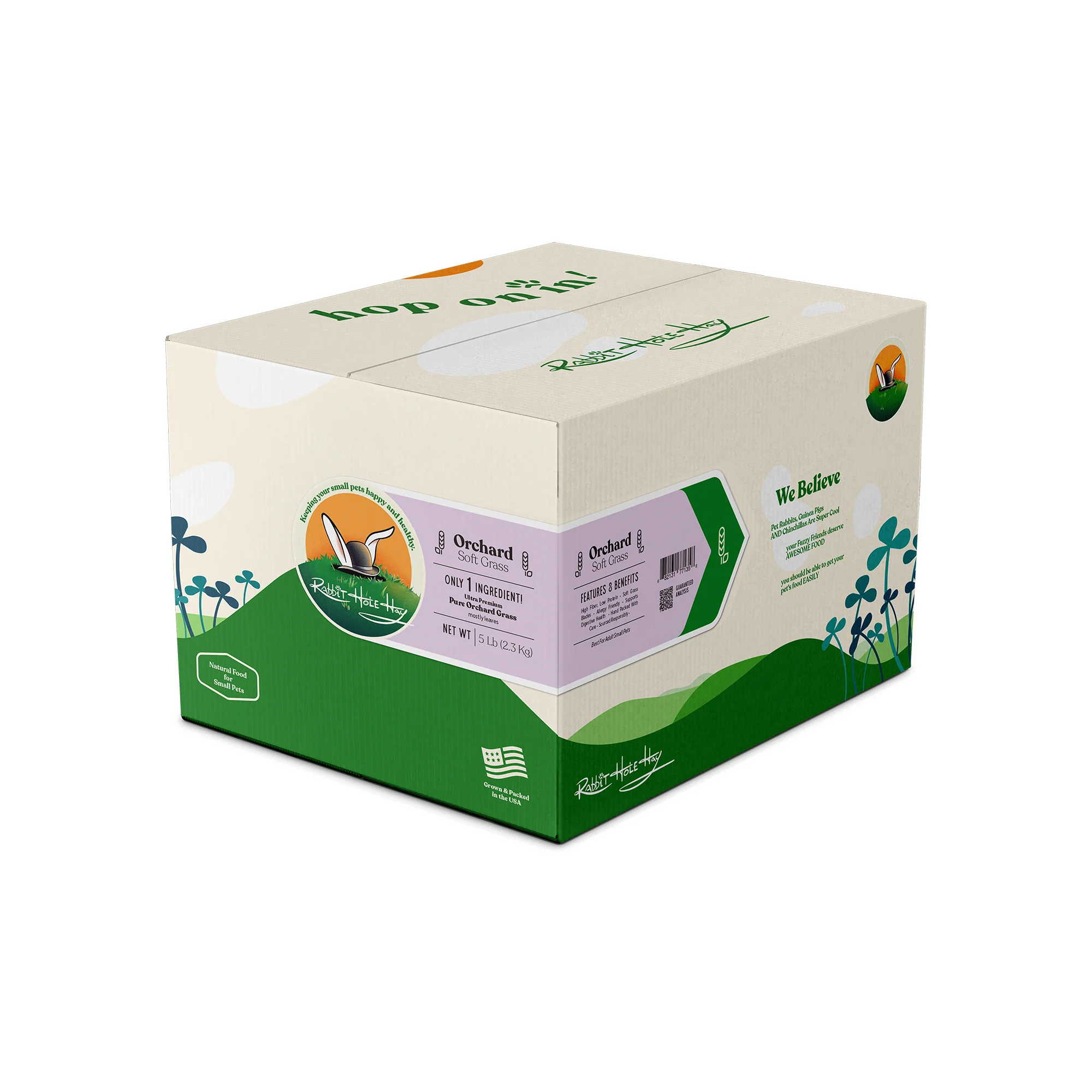
Ultra Premium Soft Orchard Grass is the mildest-textured hay we carry—fine stems and soft leaves—for rabbits, guinea pigs, chinchillas, and other small herbivores who turn away from coarser hay.
It's also a common go-to for pets or owners managing a timothy allergy, since orchard grass is a different plant species that still delivers the same key nutrients.
I'm allergic to Timothy Hay—will Orchard Grass be better?
Timothy allergies are common, in pets and the people who care for them. Orchard grass is a different plant species, so many who react to timothy tolerate it better, while it still covers the same key nutrients your pet needs.
If allergies are a concern for you or your pet, mention it to your vet so they can help you watch for symptoms as you make the switch. See our Soft Orchard Grass harvest report for season-level analysis and photos.
Who is soft orchard grass best for?
Soft orchard grass is often the right choice for picky eaters, senior pets, pets with sensitive teeth, or anyone managing a timothy allergy.
Because this cut is so soft, it may not provide as much coarse chewing resistance as stem-heavy hay—if your pet eats it exclusively, mention that to your vet at checkups. Chew toys such as apple chew sticks, or mixing in coarse orchard grass or a timothy cut, can help add more chewing variety.
What are the key benefits?
- Softest texture — Fine stems and gentle leaves for picky eaters, seniors, and sensitive teeth.
- Timothy-allergy friendly — A different plant species that still covers the same key nutrients.
- Hand-packed fresh — Packed by hand for fresh hay with minimal dust.
- High fiber, naturally lower protein — Supports healthy digestion and steady weight in a grass-hay diet.
- Made for small herbivores — Rabbits, guinea pigs, chinchillas, and similar pets.
How much orchard grass should I feed?
Keep grass hay available at all times. For adult rabbits 7 months and older and guinea pigs 6 months and older, grass hay should make up at least 80% of the diet. For chinchillas older than 1 year, aim for at least 75% grass hay.
Pellets and treats are supplemental. When switching hays, mix the old and new hay over 7–14 days and watch appetite and droppings. Younger animals, nursing mothers, and pets with health concerns may need different portions—check with your vet if you're unsure.
What is in this hay?
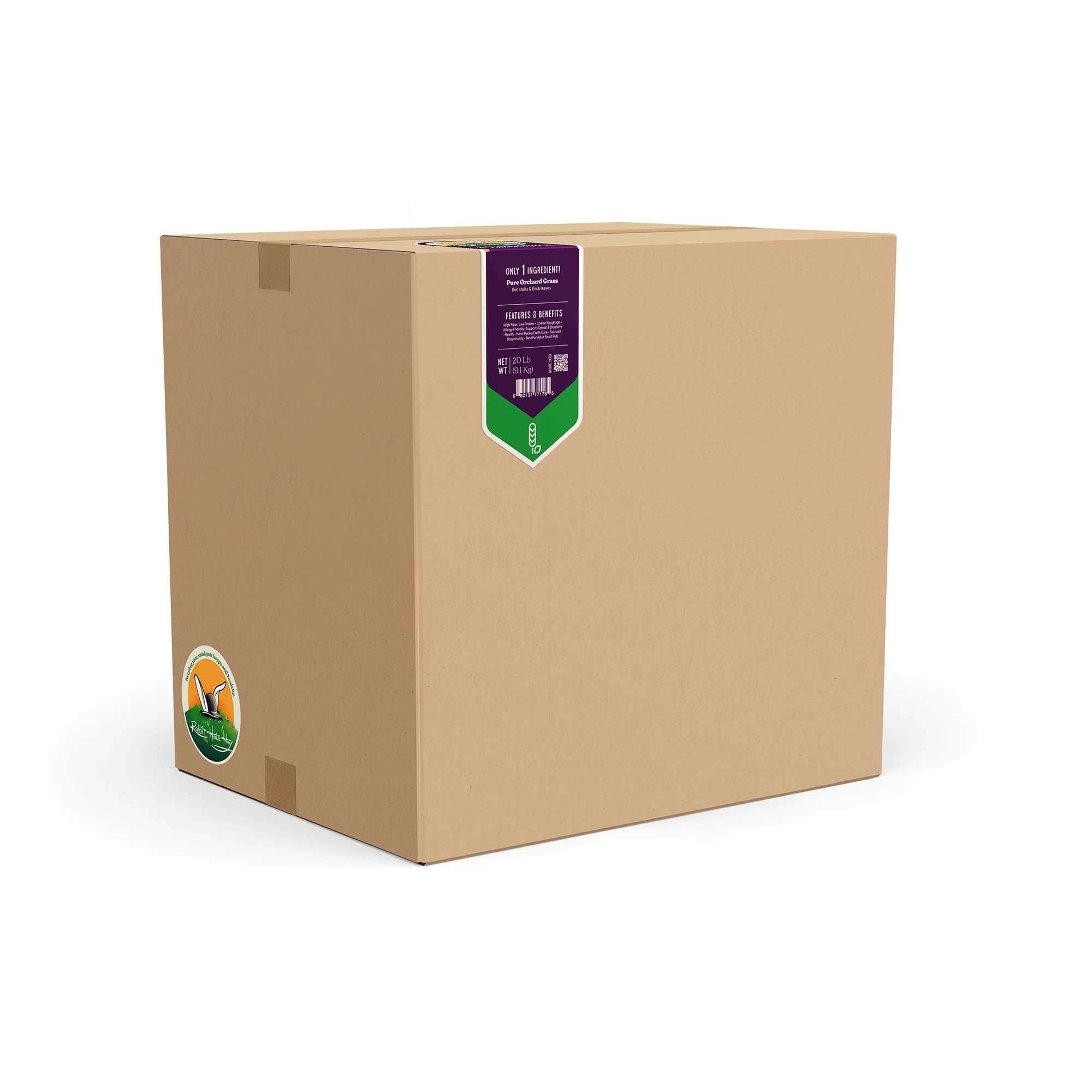
Ingredients: 100% orchard grass
Guaranteed analysis:
- Crude protein — min 10%
- Crude fat — min 2%
- ADF fiber — min 26%, max 33%
- NDF fiber — min 45%, max 51%
How do we pack, source, and report on hay quality?
We visually inspect and hand-pack every bag so you get fresh hay with minimal dust and fewer fines to sort through at home. Long strands support natural foraging and digestion. Bagging also helps protect freshness from drying out or picking up odors in storage.
Store hay in a cool, dry place with good airflow. Avoid sealing hay in plastic long-term; if hay smells musty, feels damp, or looks unusually discolored, discard it and open a fresh bag.
We’re based in Northern California and source hay from trusted growers in the surrounding Northwest regions. Those grower relationships help us stay close to harvest quality, grading, and the standards behind every bag we ship. Batch updates post every 4–6 weeks through Fresh From The Hopper.
This product is eligible for Subscribe & Save, with savings up to 15% on recurring deliveries. The first three subscription orders receive 10% off, and the discount increases to 15% starting with the fourth order. Bundle & Save promotions may also appear when available.
For current RHDV2 policy and hay-safety information, see our RHDV2 information hub and the RHDV2 section of our FAQ.
Original: $10.00
-65%$10.00
$3.50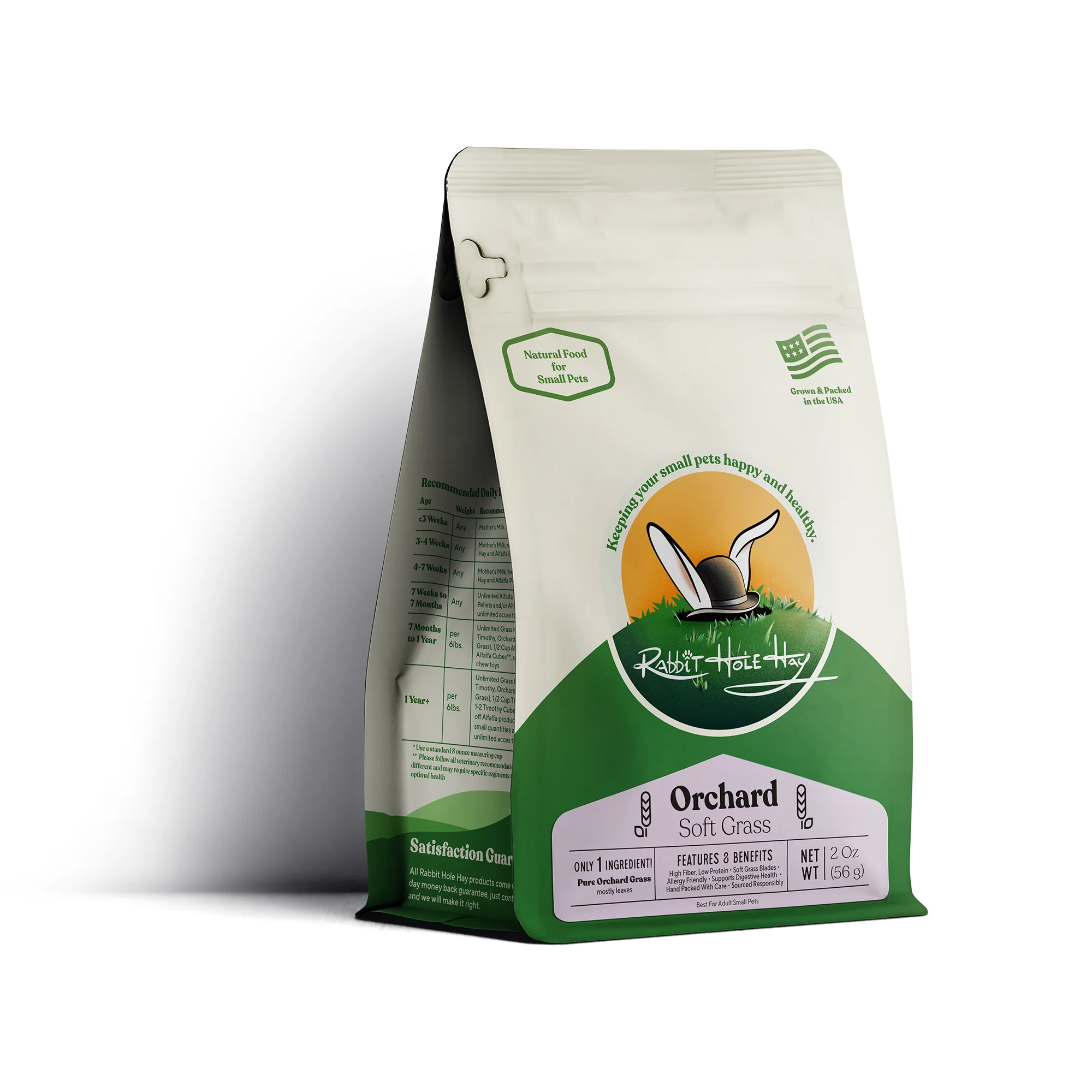

Description
What is Ultra Premium Soft Orchard Grass?
Ultra Premium Soft Orchard Grass is the mildest-textured hay we carry—fine stems and soft leaves—for rabbits, guinea pigs, chinchillas, and other small herbivores who turn away from coarser hay.
It's also a common go-to for pets or owners managing a timothy allergy, since orchard grass is a different plant species that still delivers the same key nutrients.
I'm allergic to Timothy Hay—will Orchard Grass be better?
Timothy allergies are common, in pets and the people who care for them. Orchard grass is a different plant species, so many who react to timothy tolerate it better, while it still covers the same key nutrients your pet needs.
If allergies are a concern for you or your pet, mention it to your vet so they can help you watch for symptoms as you make the switch. See our Soft Orchard Grass harvest report for season-level analysis and photos.
Who is soft orchard grass best for?
Soft orchard grass is often the right choice for picky eaters, senior pets, pets with sensitive teeth, or anyone managing a timothy allergy.
Because this cut is so soft, it may not provide as much coarse chewing resistance as stem-heavy hay—if your pet eats it exclusively, mention that to your vet at checkups. Chew toys such as apple chew sticks, or mixing in coarse orchard grass or a timothy cut, can help add more chewing variety.
What are the key benefits?
- Softest texture — Fine stems and gentle leaves for picky eaters, seniors, and sensitive teeth.
- Timothy-allergy friendly — A different plant species that still covers the same key nutrients.
- Hand-packed fresh — Packed by hand for fresh hay with minimal dust.
- High fiber, naturally lower protein — Supports healthy digestion and steady weight in a grass-hay diet.
- Made for small herbivores — Rabbits, guinea pigs, chinchillas, and similar pets.
How much orchard grass should I feed?
Keep grass hay available at all times. For adult rabbits 7 months and older and guinea pigs 6 months and older, grass hay should make up at least 80% of the diet. For chinchillas older than 1 year, aim for at least 75% grass hay.
Pellets and treats are supplemental. When switching hays, mix the old and new hay over 7–14 days and watch appetite and droppings. Younger animals, nursing mothers, and pets with health concerns may need different portions—check with your vet if you're unsure.
What is in this hay?
Ingredients: 100% orchard grass
Guaranteed analysis:
- Crude protein — min 10%
- Crude fat — min 2%
- ADF fiber — min 26%, max 33%
- NDF fiber — min 45%, max 51%
How do we pack, source, and report on hay quality?
We visually inspect and hand-pack every bag so you get fresh hay with minimal dust and fewer fines to sort through at home. Long strands support natural foraging and digestion. Bagging also helps protect freshness from drying out or picking up odors in storage.
Store hay in a cool, dry place with good airflow. Avoid sealing hay in plastic long-term; if hay smells musty, feels damp, or looks unusually discolored, discard it and open a fresh bag.
We’re based in Northern California and source hay from trusted growers in the surrounding Northwest regions. Those grower relationships help us stay close to harvest quality, grading, and the standards behind every bag we ship. Batch updates post every 4–6 weeks through Fresh From The Hopper.
This product is eligible for Subscribe & Save, with savings up to 15% on recurring deliveries. The first three subscription orders receive 10% off, and the discount increases to 15% starting with the fourth order. Bundle & Save promotions may also appear when available.
For current RHDV2 policy and hay-safety information, see our RHDV2 information hub and the RHDV2 section of our FAQ.